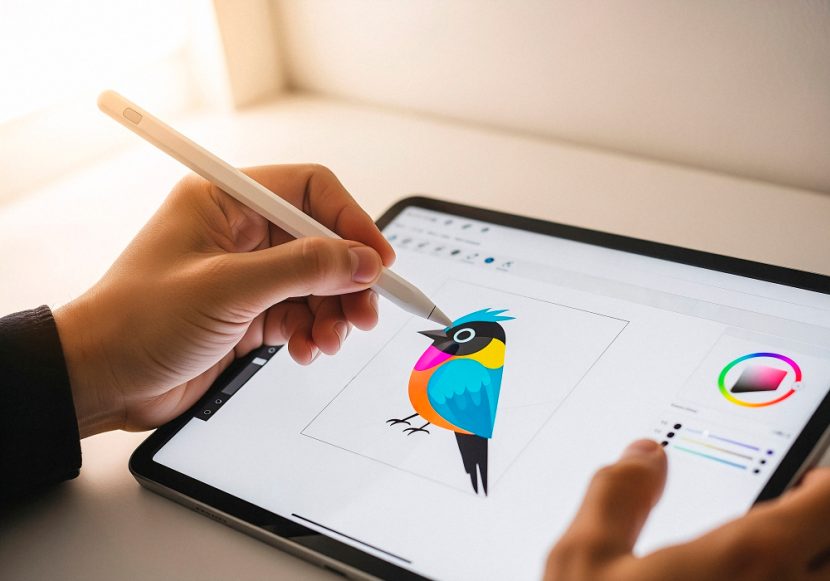
The world of animation used to be a fortress with very high walls. If you wanted to make a character blink, walk, or smile, you needed a massive desk, a stack of paper the size of a phone book, and the patience of a saint. You had to draw every single movement by hand, twenty-four times for every second of film. Even when computers came along, they brought their own brand of headaches, requiring expensive software and years of clicking through complex menus. It was a craft for the obsessed and the well-funded. However, things are shifting at a frightening speed. AI tools are popping up everywhere, promising to turn a few lines of text into a moving scene. This change feels like a double-edged sword for those of us who love a good story. On one side, we have a future where anyone with a laptop can be a filmmaker. On the other, we risk drowning in a sea of low-effort, soulless videos that all look the same. We need to figure out if this tech is a genuine leg up for creators or a fast track to a boring internet.
The Big Question
For decades, the sheer difficulty of animation acted as a filter. It was so hard to do that people only did it if they really had something to say or a studio to answer to. This meant that while there was less content, the stuff that made it to our screens usually had a lot of thought behind it. Now, generative AI is smashing that filter to bits. Tools like Sora, Runway, or Kling allow people to bypass the “drawing” bit entirely. You type in a prompt, wait a minute, and a video appears. It is a massive leap from the days of light boxes and pegs.
This sudden ease of use brings up a massive debate. We are seeing a divide between people who think this will democratise art and those who fear it will ruin it. If everyone can make a cartoon, does the value of a cartoon go down? We have seen similar things happen with digital photography and music production. When the tools get easier, the volume of work goes up. The real worry is whether the heart of the medium survives when the struggle to create it is removed. We are looking at a future where our feeds could be packed with visuals that are technically impressive but narratively empty.
The Good News: Everyone Can Join In
One of the most exciting parts of this tech is that it removes the physical requirement of being a master illustrator. There are thousands of brilliant storytellers out there who have amazing ideas for characters and worlds but simply cannot draw a straight line. In the past, those ideas would stay locked in a notebook or a brain forever. AI changes that. It acts as a bridge, letting the “idea people” finally see their visions move. It is a win for accessibility because it moves the focus from technical dexterity to creative vision.
No more drawing for years
Traditionally, an animator had to spend a decade mastering anatomy, physics, and perspective before they could even think about lead animator roles. It was a gruelling apprenticeship. With AI assistance, the “heavy lifting” of rendering and perspective is handled by the software. This does not mean the human does nothing, but it means they do not have to spend ten hours shading a single frame. This opens the door for older creators, people with disabilities that make fine motor skills difficult, or just busy folks who only have an hour a week to spare. The barrier to entry is finally crumbling.
Cheaper and faster
Making an animated short used to cost a fortune. You needed a team of artists, editors, and expensive rendering farms. Small independent creators were often priced out of the market before they even started. AI tools can run on a standard home computer or through a web browser, which slashes production costs. This means a single person in their bedroom can theoretically produce something that looks like it came from a mid-sized studio. It levels the playing field, allowing the little guy to compete with the giants of the industry.
More stories
When the cost of making something drops, people take more risks. Studios are usually scared of weird or niche ideas because they cost too much to fail. But if an individual can make a weird, experimental animation for nearly zero pounds, we are going to see some truly unique stuff. We might get stories from cultures and perspectives that have been ignored by big media for years. This could lead to a golden age of diverse storytelling where the only limit is what someone can imagine, rather than what a producer is willing to fund.
The Bad News: The Risk of Mediocre Content
The flip side of this easy access is the potential for a massive pile of rubbish. When something is hard to make, you tend to value it more. When you can generate a video in ten seconds, the temptation to just “post and forget” is huge. We are already seeing this on social media. Platforms are getting cluttered with AI-generated clips that look shiny at first glance but fall apart if you look at them for more than three seconds. It is the fast food of the art world, quick to produce and consume, but ultimately unsatisfying.
Lazy videos
The biggest danger is that people might stop trying to tell good stories. If you can make a video by just typing “cat dancing in a kitchen,” you might not bother to give that cat a personality or a reason to dance. Good animation is about timing, acting, and soul. AI often lacks that. It tends to produce “floaty” movements that feel slightly off. If creators get lazy and rely entirely on what the machine spits out, we will be stuck with a lot of content that has no point. It is just movement for the sake of movement.
Same-looking styles
AI models are trained on existing art. Because of this, they tend to lean towards a “middle-ground” aesthetic that feels very familiar. If everyone uses the same popular models, everything starts to look like a slightly blurry version of a Pixar movie or a generic anime. We lose the “hand-drawn” imperfections that make art feel human. If we are not careful, the internet will become a hall of mirrors where every animation is just a remix of something else, leading to a massive loss of original visual culture.
The Flood
We only have so much time in the day to watch things. If the internet is flooded with millions of average AI videos every hour, the truly great stuff gets buried. It becomes a nightmare for audiences to find quality work. Professional animators who spend months on a project might find their work drowned out by a hundred AI videos that look “good enough” to the casual viewer. This could discourage people from putting in the effort to make something truly masterpiece-level, as the reward for doing so gets smaller and smaller.
Finding a Balance
The trick to making this work is treating AI like a tool rather than a replacement. Think of it like a calculator. A calculator did not stop people from doing maths, it just stopped them from having to do the boring long division by hand. In animation, AI can handle the repetitive tasks that nobody likes doing. It can clean up lines, fill in background colours, or help with the “in-between” frames. This frees up the human artist to focus on the important bits like the acting, the timing of a joke, or the emotional weight of a scene.
Animation is essentially a form of acting. A computer can move a character’s mouth, but it does not know why the character is sad or how a tiny quiver in the lip can break an audience’s heart. That is where the human comes in. The best results will come from people who use AI to speed up the process but still spend time “directing” every shot. We need to keep our hands on the steering wheel. If we let the AI drive, we will just end up in the same boring place everyone else is going.
Future Directions for the Craft
As we move forward, the definition of an “animator” is going to change. We will see people who are more like directors or curators. They will guide the AI, tweaking the output and adding their own unique flare. It is a bit like how photography evolved. When cameras were invented, painters thought it was the end of art. Instead, it just created a new way to see the world. We are at that same crossroads now.
There will likely be a rough period where the internet is indeed a bit of a mess. We will see lots of weird, uncanny-valley videos and stolen art styles. But eventually, the novelty will wear off. Audiences will get bored of the “standard” AI look and start craving something with more personality. The creators who survive and thrive will be the ones who use these tools to push boundaries, not just to make things faster. We have to make sure we do not lose the “magic” in the rush to be efficient.
At the end of the day, a good story is a good story, regardless of how it was made. If a kid in a rural village uses AI to tell a story that makes me cry or laugh, then the tech has done its job. We just have to be careful not to let the ease of the process make us forget why we started telling stories in the first place. The human element is what makes us care about a bunch of moving pixels. As long as we keep that at the centre, the medium has a bright, albeit very busy, future ahead of it.

With a professional journey spanning 15 years, Ciara Rowena has established herself as a versatile powerhouse in the Australian media landscape. Her academic background, including a Bachelor of Communications with a double major in Public Relations and Journalism, provides her with a unique dual perspective on how content is both produced and promoted.
Ciara’s expertise lies in the strategic alignment of content across multi-channel ecosystems. She has successfully led campaigns that integrate long-form editorial content with social media storytelling and email marketing, resulting in measurable community growth and brand loyalty. Beyond the technical metrics, Ciara is a passionate advocate for “conscious content”. The idea that digital media should serve to empower and educate rather than simply occupy space. Her portfolio includes extensive work in the fields of mental health advocacy, sustainable living, and female entrepreneurship. Based in Perth, she continues to consult for agencies and publications that value integrity, creativity, and the power of a well-told story.